<?xml version="1.0" encoding="utf-8"?><feed xmlns="http://www.w3.org/2005/Atom" ><generator uri="https://jekyllrb.com/" version="3.10.0">Jekyll</generator><link href="http://www.utahmug.org/feed.xml" rel="self" type="application/atom+xml" /><link href="http://www.utahmug.org/" rel="alternate" type="text/html" /><updated>2026-01-28T18:00:46+00:00</updated><id>http://www.utahmug.org/feed.xml</id><title type="html">Utah Model Users Group</title><subtitle>Informing, improving, and promoting travel demand forecasting across the state of Utah</subtitle><author><name>Bill Hereth &amp; Chris Day</name></author><entry><title type="html">Tim Baird (User Spotlight January 2026)</title><link href="http://www.utahmug.org/userspotlight13/" rel="alternate" type="text/html" title="Tim Baird (User Spotlight January 2026)" /><published>2026-01-09T00:00:00+00:00</published><updated>2026-01-09T00:00:00+00:00</updated><id>http://www.utahmug.org/userspotlight13</id><content type="html" xml:base="http://www.utahmug.org/userspotlight13/"><![CDATA[<div class="header">
    <div class="header-image">
        <p style="font-size: 22pt; font-weight: bold;">TIM BAIRD</p>
        <img src="../images/Tim Baird.jpg" width="200px" alt="Tim Baird" />
    </div>
    <div class="header-content">
        <strong>Education:</strong> UW-Madison - B.S. Political Science, UBC - M.S. Urban Planning<br /><br />
		
		<strong>Current Employment:</strong> Fehr &amp; Peers - Associate <br /><br />
		
        <strong>Greatest Interests about Travel Demand Modeling and Forecasting:</strong> Finding interesting applications of travel models to answer planning questions, especially when combined with other models or data sources. Digging into underlying data and assumptions. Thinking through the cost/benefit balance of adding complexity to models.<br /><br />

        <strong>Favorite Modeling Project(s):</strong> I led modeling work for UDOT's Logan US89/91 study that wrapped up last year, where we used the CMPO regional model to evaluate off-corridor solutions to benefit Logan's Main Street and the broader system, and then built a VISUM mesoscopic model off the regional model to evaluate solutions in more detail. <br /><br />

        <strong>Valuable Resources, Tools or Software:</strong> The WF vizTool! Good VM infrastructure. Good old ArcGIS and Excel. F&amp;P's Forecasting Discipline Group. <br /><br />

        <strong>Hobbies and Interests:</strong> Rock climbing, skiing, hiking, cooking <br /><br /> 

    </div>
</div>

<style>
    .header {
        display: flex;
        flex-wrap: wrap;
    }

    .header-image {
        flex: 0 0 300px;
        text-align: left;
    }

    .header-content {
        flex: 1;
    }

    .header-image img {
        max-width: 200%;
    }
</style>]]></content><author><name>Josh Alpers</name></author><category term="UserSpotlight" /><summary type="html"><![CDATA[TIM BAIRD Education: UW-Madison - B.S. Political Science, UBC - M.S. Urban Planning Current Employment: Fehr &amp; Peers - Associate Greatest Interests about Travel Demand Modeling and Forecasting: Finding interesting applications of travel models to answer planning questions, especially when combined with other models or data sources. Digging into underlying data and assumptions. Thinking through the cost/benefit balance of adding complexity to models.]]></summary></entry><entry><title type="html">Radhika Bhandari (User Spotlight January 2026)</title><link href="http://www.utahmug.org/userspotlight14/" rel="alternate" type="text/html" title="Radhika Bhandari (User Spotlight January 2026)" /><published>2026-01-09T00:00:00+00:00</published><updated>2026-01-09T00:00:00+00:00</updated><id>http://www.utahmug.org/userspotlight14</id><content type="html" xml:base="http://www.utahmug.org/userspotlight14/"><![CDATA[<div class="header">
    <div class="header-image">
        <p style="font-size: 22pt; font-weight: bold;">Radhika Bhandari</p>
        <img src="../images/Radhika Bhandari.jpeg" width="200px" alt="Radhika Bhandari" />
    </div>
    <div class="header-content">
        <strong>Education:</strong> University of South Florida &amp; Kathmandu University, Geography/ Geomatics Engineering<br /><br />
		
		<strong>Current Employment:</strong> Dixie Metropolitan Planning Organization - Data Scientist <br /><br />
		
        <strong>Greatest Interests about Travel Demand Modeling and Forecasting:</strong> I find it fascinating how the various components of demand modeling come together, with each aspect interconnected and influencing overall demand. Working on it is intellectually stimulating, and I enjoy this process.<br /><br />

        <strong>Favorite Modeling Project(s):</strong> For the 2023 LRP/RTP, only about 900 of 12,000 Utah Tech enrollment records had in-county addresses, making direct spatial representation unrealistic. I applied and validated an inverse distance decay approach to better reflect actual enrollment patterns, and enjoyed working through the data gaps to find a practical solution. <br /><br />

        <strong>Valuable Resources, Tools or Software:</strong> NCHRP Report 716, Conferences such as MOMO, ODOT Training on travel demand modeling <br /><br />

        <strong>Hobbies and Interests:</strong> Outside of work, I enjoy dancing, hiking, trying new recipes and spending time with my boyfriend and family. I am also a dedicated practitioner of Kriya Yoga and Hatha Yoga. <br /><br /> 

    </div>
</div>

<style>
    .header {
        display: flex;
        flex-wrap: wrap;
    }

    .header-image {
        flex: 0 0 300px;
        text-align: left;
    }

    .header-content {
        flex: 1;
    }

    .header-image img {
        max-width: 200%;
    }
</style>]]></content><author><name>Josh Alpers</name></author><category term="UserSpotlight" /><summary type="html"><![CDATA[Radhika Bhandari Education: University of South Florida &amp; Kathmandu University, Geography/ Geomatics Engineering Current Employment: Dixie Metropolitan Planning Organization - Data Scientist Greatest Interests about Travel Demand Modeling and Forecasting: I find it fascinating how the various components of demand modeling come together, with each aspect interconnected and influencing overall demand. Working on it is intellectually stimulating, and I enjoy this process.]]></summary></entry><entry><title type="html">January 2026 Meeting</title><link href="http://www.utahmug.org/meeting10/" rel="alternate" type="text/html" title="January 2026 Meeting" /><published>2025-12-19T00:00:00+00:00</published><updated>2025-12-19T00:00:00+00:00</updated><id>http://www.utahmug.org/meeting10</id><content type="html" xml:base="http://www.utahmug.org/meeting10/"><![CDATA[<p><strong>Date/Time:</strong> Thursday January 22, 2026 10:00-11:30am<br />
<strong>Location:</strong> UDOT - 4501 Constitution Blvd, Taylorsville, UT 84129 <br /></p>

<p>Virtual option available through the calendar appointment. Email <a href="mailto:utahmug@gmail.com">utahMUG@gmail.com</a> to request the calendar appointment.</p>

<hr />

<h1 id="agenda">Agenda</h1>

<h2 id="welcome--introductions">Welcome &amp; Introductions</h2>

<ul>
  <li>Introductions (around table and virtual)</li>
  <li>User Spotlights</li>
</ul>

<h2 id="business-executive-committee-changes">Business: Executive Committee Changes</h2>

<ul>
  <li>Ratification of new Executive Committee members:
    <ul>
      <li>Tim Hereth, MAG</li>
      <li>Tim Baird, Fehr &amp; Peers</li>
    </ul>
  </li>
  <li>Ratification of Executive Committee leadership changes:
    <ul>
      <li>Chair: Bill Hereth, WFRC</li>
      <li>Vice-Chair: Tim Hereth, MAG</li>
    </ul>
  </li>
  <li>Opening for one additional consultant representative on Executive Committee</li>
</ul>

<h2 id="discussion-topics">Discussion Topics</h2>

<ul>
  <li><strong>Utah-Specific resources:</strong>
    <ul>
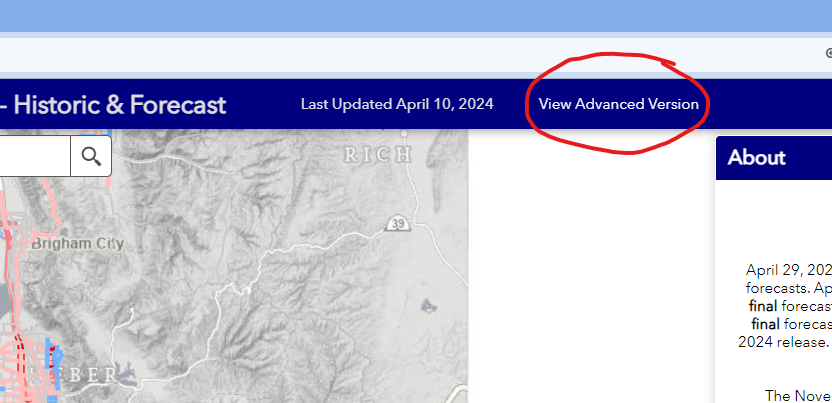
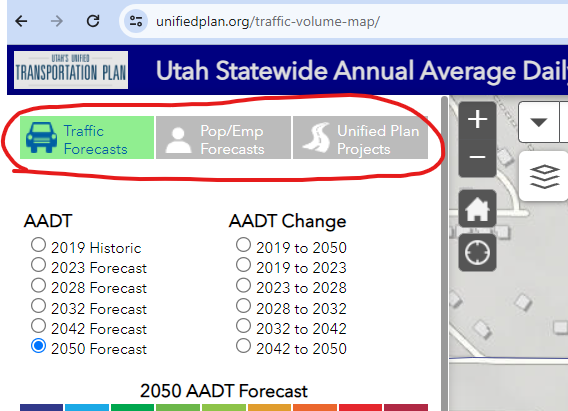
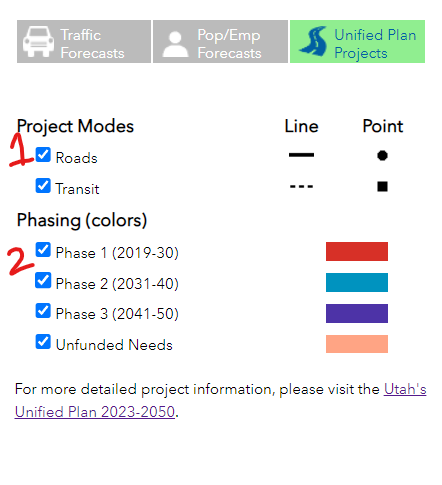
      <li>Volume traffic map (<a href="https://unifiedplan.org/traffic-volume-map/" target="\_blank">link</a>)</li>
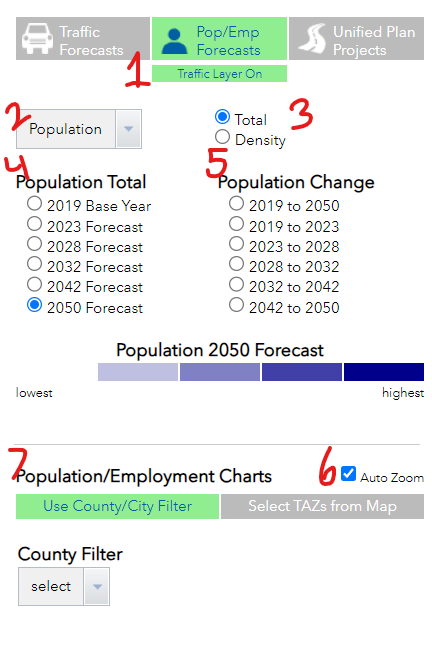
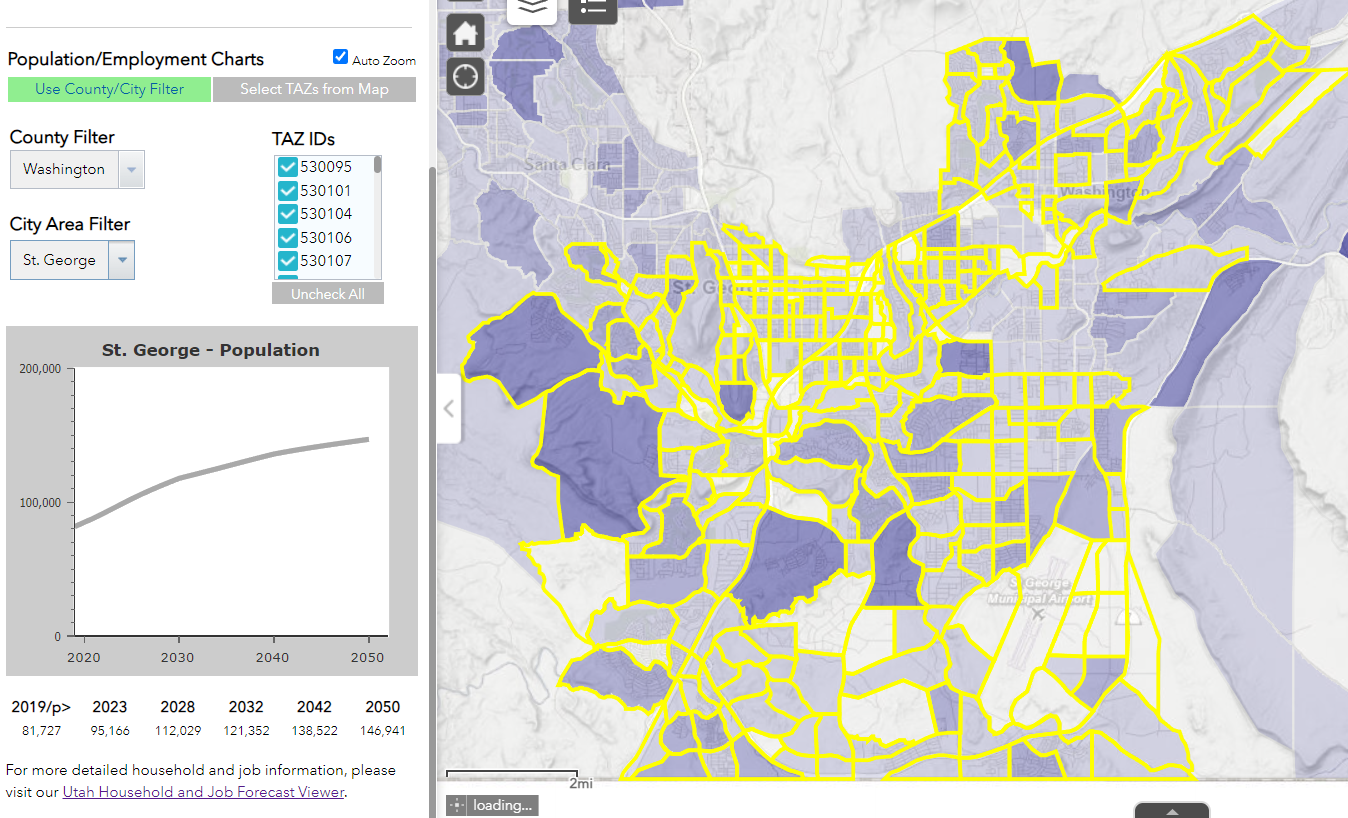
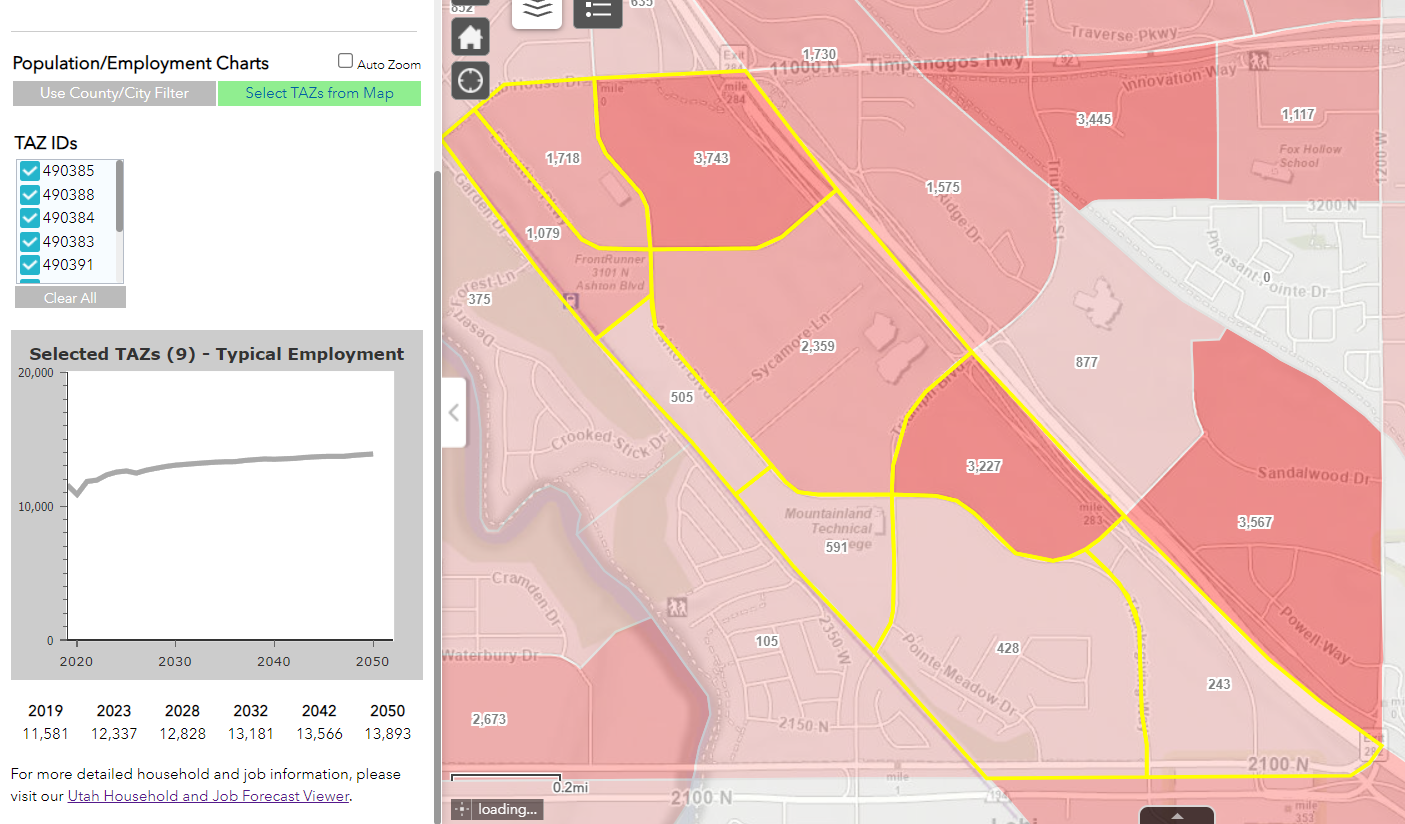
      <li>Household/Job viewer (<a href="https://unifiedplan.org/utah-household-job-forecast-map/" target="\_blank">link</a>)</li>
      <li>Model one-pagers and documentation (<a href="https://utahmug.org/models/" target="\_blank">link</a>)</li>
    </ul>
  </li>
  <li><strong>Presentation solicitations</strong> (<a href="https://forms.gle/VtQkC5dnV1itNVoWA">link</a>) – due by March 6th, 2026</li>
  <li><strong>Others?</strong></li>
</ul>

<h2 id="presentations">Presentations</h2>

<ul>
  <li>
    <p><strong>An Analytical Framework to Assessing Network Connectivity, Vulnerability and Resilience: Lessons Learned from San Bernardino County</strong> (<a href="https://docs.google.com/presentation/d/1ALbwSbpH3BnO0NyFKv21V5Q5_SgU77ek/edit?usp=sharing&amp;ouid=114966978052404666809&amp;rtpof=true&amp;sd=true">link</a>)<br /><em>Zeina Wafa, Cambridge Systematics.</em><br /><em>Summary: The presentation describes the analytical framework developed for assessing network connectivity by calculating distance travel to exit an area or to access a shelter in the event of an emergency. The framework also calculates emergency response times from fire departments to impacted areas, identifying potential vulnerabilities and connectivity issues in the network. The framework also responds to legislative requirements of AB 747 and SB 99 by calculating average evacuation times by hazard scenario as well as identifying parcels vulnerable to being stranded in an emergency, respectively. Finally, the framework leverages the travel demand model to examine network resilience and determine areas that can benefit from redundancies to accommodate evacuation demand.</em></p>
  </li>
  <li>
    <p><strong>Half Time Break</strong><br /><em>Jared Lillywhite, Mountainland Association of Governments</em></p>
  </li>
  <li>
    <p><strong>Under the Hood: Updates to the Utah Travel Demand Models</strong> (<a href="https://docs.google.com/presentation/d/1wy3xnU3EzSEoemtj6VbmY_wngr95Id0GKuf_zjfggZU/edit?usp=sharing">link</a>)<br /><em>Planning Agencies &amp; RSG.</em> <br /><em>The Cache MPO, Dixie MPO, WFRC, MAG, and UDOT are in the process to update all the travel demand models in the state to support the Regional Transportation Plans and Long Range Plan. This presentation will cover the changes in the models, which include all the inputs (TAZs, SE, networks, etc.), the travel behavior parameters (coming from the 2023 HTS), and various model components (commercial vehicles, long distance, recreation, etc.). This presentation would be more than just a quick update; it will provide more details on the changes and give the MUG members and opportunity to ask questions so they know what is coming for projects they may be working on or propose in the future. This will cover all the models in the state: statewide model, Wasatch Front, Cache, Dixie, Summit-Wasatch, and Iron.</em></p>
  </li>
</ul>

<h2 id="next-meeting">Next meeting</h2>

<ul>
  <li><strong>Date/Time:</strong> Thursday, May 14, 10:00-11:30 am @ WFRC.</li>
</ul>

<h2 id="-lunchimug">🍽 lunchiMUG</h2>

<ul>
  <li>Gather with us at Paik’s Noodles for lunch.</li>
</ul>

<hr />

<h1 id="notes">Notes</h1>]]></content><author><name>Natalia Brown</name></author><category term="Meetings" /><summary type="html"><![CDATA[Date/Time: Thursday January 22, 2026 10:00-11:30am Location: UDOT - 4501 Constitution Blvd, Taylorsville, UT 84129]]></summary></entry><entry><title type="html">WF TDM Version 9.2.0 - Official Release</title><link href="http://www.utahmug.org/v920-release/" rel="alternate" type="text/html" title="WF TDM Version 9.2.0 - Official Release" /><published>2025-11-13T00:00:00+00:00</published><updated>2025-11-13T00:00:00+00:00</updated><id>http://www.utahmug.org/v920-release</id><content type="html" xml:base="http://www.utahmug.org/v920-release/"><![CDATA[<p>Version 9.2.0 to the Wasatch Front Travel Demand Model (WF TDM) has been released. To access the new model, please visit the <a href="https://github.com/WFRCAnalytics/WF-TDM-Official-Releases/releases/tag/v9.2.0-official" target="_blank">WF TDM Official Releases Repository</a>. If do not have access to the repository please request access by emailing Suzie Swim at suzie.swim@wfrc.utah.gov or Tim Hereth at thereth@mountainland.org.</p>

<p>The online documentation, including the What’s New Document and Model Validation Report, can be accessed <a href="https://wfrc.utah.gov/wftdm-docs/v9x/v920/">here</a>.</p>

<p>As stated in the document, version 9.2.0 of the Wasatch Front Travel Demand Model includes key updates in the network inputs. The highway network was revised to reflect WFRC’s Amendment #4 to the 2023–2050 RTP, incorporating changes to Legacy Parkway and minor changes to I-15 in Box Elder County.</p>

<p>Have a great day!</p>]]></content><author><name>Chris Day</name></author><category term="WF-TDM" /><summary type="html"><![CDATA[Version 9.2.0 to the Wasatch Front Travel Demand Model (WF TDM) has been released. To access the new model, please visit the WF TDM Official Releases Repository. If do not have access to the repository please request access by emailing Suzie Swim at suzie.swim@wfrc.utah.gov or Tim Hereth at thereth@mountainland.org.]]></summary></entry><entry><title type="html">Andrew Wilding (User Spotlight September 2025)</title><link href="http://www.utahmug.org/userspotlight11/" rel="alternate" type="text/html" title="Andrew Wilding (User Spotlight September 2025)" /><published>2025-09-08T00:00:00+00:00</published><updated>2025-09-08T00:00:00+00:00</updated><id>http://www.utahmug.org/userspotlight11</id><content type="html" xml:base="http://www.utahmug.org/userspotlight11/"><![CDATA[<div class="header">
    <div class="header-image">
        <p style="font-size: 22pt; font-weight: bold;">ANDREW WILDING</p>
        <img src="../images/Andrew.jpg" width="200px" alt="Andrew Wilding" />
    </div>
    <div class="header-content">
        <strong>Education:</strong> Associates of Computer Science from SLCC<br /><br />
		
		<strong>Current Employment:</strong> Data Analyst with the UDOT Planning Analytic Team <br /><br />
		
        <strong>Greatest Interests about Travel Demand Modeling and Forecasting:</strong> Data processing and validation. I enjoy taking a raw dataset and going through all the steps to transform it into information or tools that we can use to make informed transportation investment decisions. <br /><br />

        <strong>Favorite Modeling Project(s):</strong> The Capacity Project Prioritization Process. It is very fulfilling to watch a project go through the nomination process, get scored in our model, and then end up on a ranked list in front of the commission. Redesigning the workflow of the models over the summer has been very enjoyable. <br /><br />

        <strong>Valuable Resources, Tools or Software:</strong> In person meetings with stakeholders. Python. <br /><br />

        <strong>Hobbies and Interests:</strong> Disc golf, kayaking, travelling, bad reality TV, and any time spent with my girlfriend and dog. <br /><br /> 

    </div>
</div>

<style>
    .header {
        display: flex;
        flex-wrap: wrap;
    }

    .header-image {
        flex: 0 0 300px;
        text-align: left;
    }

    .header-content {
        flex: 1;
    }

    .header-image img {
        max-width: 200%;
    }
</style>]]></content><author><name>Josh Alpers</name></author><category term="UserSpotlight" /><summary type="html"><![CDATA[ANDREW WILDING Education: Associates of Computer Science from SLCC Current Employment: Data Analyst with the UDOT Planning Analytic Team Greatest Interests about Travel Demand Modeling and Forecasting: Data processing and validation. I enjoy taking a raw dataset and going through all the steps to transform it into information or tools that we can use to make informed transportation investment decisions.]]></summary></entry><entry><title type="html">Chad Worthen (User Spotlight September 2025)</title><link href="http://www.utahmug.org/userspotlight12/" rel="alternate" type="text/html" title="Chad Worthen (User Spotlight September 2025)" /><published>2025-09-08T00:00:00+00:00</published><updated>2025-09-08T00:00:00+00:00</updated><id>http://www.utahmug.org/userspotlight12</id><content type="html" xml:base="http://www.utahmug.org/userspotlight12/"><![CDATA[<div class="header">
    <div class="header-image">
        <p style="font-size: 22pt; font-weight: bold;">CHAD WORTHEN</p>
        <img src="../images/ChadWorthen.jpg" width="200px" alt="Chad Worthen" />
    </div>
    <div class="header-content">
        <strong>Education:</strong> M.S. Civil Engineering from BYU<br /><br />
		
		<strong>Current Employment:</strong> CEO and President of Insight Analytics <br /><br />
		
        <strong>Greatest Interests about Travel Demand Modeling and Forecasting:</strong> There is always something new to learn and do, which keeps work fresh &amp; exciting. <br /><br />

        <strong>Favorite Modeling Project(s):</strong> One of my first major contributions to the WF Travel Demand Model was revamping the Household Disaggregation model. I rewrote it in Cube Voyager, replacing the outdated software handoff and removing its reliance on files from previous runs. These changes made the model more transparent, easier to use, and much simpler to update. <br /><br />

        <strong>Valuable Resources, Tools or Software:</strong> Spreadsheets were my best friend for most of my career, with ArcGIS a close second. Python has now become a powerful tool in the toolbox. <br /><br />

        <strong>Hobbies and Interests:</strong> Hiking, classic movies, traveling, and occasionally yard work. <br /><br /> 

    </div>
</div>

<style>
    .header {
        display: flex;
        flex-wrap: wrap;
    }

    .header-image {
        flex: 0 0 300px;
        text-align: left;
    }

    .header-content {
        flex: 1;
    }

    .header-image img {
        max-width: 200%;
    }
</style>]]></content><author><name>Josh Alpers</name></author><category term="UserSpotlight" /><summary type="html"><![CDATA[CHAD WORTHEN Education: M.S. Civil Engineering from BYU Current Employment: CEO and President of Insight Analytics Greatest Interests about Travel Demand Modeling and Forecasting: There is always something new to learn and do, which keeps work fresh &amp; exciting.]]></summary></entry><entry><title type="html">September 2025 Meeting</title><link href="http://www.utahmug.org/meeting9/" rel="alternate" type="text/html" title="September 2025 Meeting" /><published>2025-08-22T00:00:00+00:00</published><updated>2025-08-22T00:00:00+00:00</updated><id>http://www.utahmug.org/meeting9</id><content type="html" xml:base="http://www.utahmug.org/meeting9/"><![CDATA[<p><strong>Date/Time:</strong> Thursday September 11, 2025 10:00-11:30am<br />
<strong>Location:</strong> MAG - 586 E 800 N, Orem, UT 84097 <br /></p>

<p>Virtual option available through the calendar appointment. Email utahMUG@gmail.com to request the calendar appointment.</p>

<hr />

<h1 id="agenda">Agenda</h1>

<h2 id="welcome--introductions">Welcome &amp; Introductions</h2>

<ul>
  <li>Anyone attending for the first time?</li>
  <li>User Spotlights</li>
</ul>

<h2 id="presentations">Presentations</h2>

<ul>
  <li>
    <p><strong>Leveraging mobility data for the automated calibration of travel demand models</strong> <br /><em>Gaurav Vyas, Bentley Systems.</em><br /><em>Summary: Travel demand models whether 4-step or Agent-Based (ABMs) were traditionally based on special travel surveys such as Household Travel Surveys (HTS’s) that served as the main source for estimation of the model coefficients. Other types of data such as transit on-board surveys, traffic counts, transit ridership by line, etc., were primarily used for the model validation and possible adjustments of the coefficients. The presentation illustrates a new a new general approach where different types of data including HTS and big data, can be used in one systematic process of travel model calibration in an automated manner using the case studies from MAG Weekend ABM and Chattanooga Person Travel Demand model.</em></p>
  </li>
  <li>
    <p><strong>Half Time Break</strong><br /><em>Jared Lillywhite, Mountainland Association of Governments</em></p>
  </li>
  <li>
    <p><strong>Enhancing CRT Modeling in WFRC TDM v9.2: Diagnosing and Correcting Station-Level Forecast Biases (<a href="https://docs.google.com/presentation/d/1vms6dSRLROttmH4DlDV9_EON4AESysZSyNy2pfm9oYo" target="\_blank">link</a>)</strong> <br /><em>Bill Hereth, WFRC</em><br /><em>WF TDM v9.2 aims to improve CRT modeling, addressing major underestimation of Utah County boardings (-34%, Provo -90%) and overestimation in Davis County (+58%). Refinements include adjusting drive-access utility (RUNFACTOR = 2.5) and adding purpose/period ASCs by distance bins, which reduced CRT trip distance errors from -11%–-56% to -5%–-18%. While large in-vehicle time adjustments (60–75 minutes) aligned Provo boardings, they harmed model sensitivity. Findings will guide users on CRT limitations and support calibration with 2023 Household and Transit On-Board Survey data.</em></p>
  </li>
</ul>

<h2 id="discussion-topics">Discussion Topics</h2>

<ul>
  <li><strong>Utah-Specific resources:</strong>
    <ul>
      <li>Volume traffic map (<a href="https://unifiedplan.org/traffic-volume-map/" target="\_blank">link</a>)</li>
      <li>Household/Job viewer (<a href="https://unifiedplan.org/utah-household-job-forecast-map/" target="\_blank">link</a>)</li>
      <li>Model one-pagers and documentation (<a href="https://utahmug.org/models/" target="\_blank">link</a>)</li>
    </ul>
  </li>
  <li><strong>Model Status Update</strong> (<a href="https://docs.google.com/presentation/d/10oamHc9ogYgSUA8_kOSH9_BzyWuUlVTWjH_W7XGcx7w/edit?usp=sharing" target="\_blank">link</a>)
    <ul>
      <li>Utah Statewide Travel Model: Hayden Atchley, UDOT</li>
      <li>Wasatch Front TDM: Suzie Swim, WFRC</li>
      <li>Cache TDM: Isaac Gardner, CMPO</li>
      <li>Dixie TDM: Radhika Bhandari, DMPO</li>
      <li>Summit-Wasatch TDM: Hayden Atchley, UDOT</li>
      <li>Iron TDM: Hayden Atchley, UDOT</li>
    </ul>
  </li>
  <li><strong>Presentation solicitations</strong> (<a href="https://forms.gle/wsjRcwJtFuRzzgFN7">link</a>) – due by October 31st</li>
  <li><strong>Others?</strong></li>
</ul>

<h2 id="next-meeting">Next meeting</h2>

<ul>
  <li><strong>Date/Time:</strong> Thursday, January 22, 10:00-11:30 am @ UDOT.</li>
</ul>

<h2 id="-lunchimug">🍽 lunchiMUG</h2>

<ul>
  <li>Gather with us at Kneaders for lunch.</li>
</ul>

<hr />

<h1 id="notes">Notes</h1>

<p><strong>Presentation - Leveraging mobility data for the automated calibration of travel demand models</strong> <em>Gaurav Vyas, Bentley Systems</em></p>

<ul>
  <li>One Model Platform, Many Models
    <ul>
      <li>Assemble virtually any travel demand model structure including trip-based, tour-based, hybrid and activity-based models</li>
      <li>Maintain different models or versions in parallel</li>
      <li>Reduce time/effort to develop a new travel model</li>
      <li>Adapt or upgrade models with advanced features over time</li>
    </ul>
  </li>
  <li>Harmonized Demand Modeling with OpenPaths</li>
  <li>Common Data Sources in Model Development
    <ul>
      <li>Household travel survey data</li>
      <li>Traffic counts</li>
      <li>Transit ridership</li>
      <li>Primary only used for model validation</li>
    </ul>
  </li>
  <li>Big Data as a replacement?
    <ul>
      <li>Pros
        <ul>
          <li>Becoming increasingly available from vendors</li>
          <li>Big dta trip tables can be used to aggregate 4-step models in practice</li>
        </ul>
      </li>
      <li>Cons
        <ul>
          <li>Not behavioral</li>
        </ul>
      </li>
    </ul>
  </li>
  <li>How is big data used for manual calibration in practice to far?
    <ul>
      <li>Pre-processing of O-D level data to create sub-model specific targets</li>
      <li>No systemic approach to identify outliers</li>
      <li>Our approach
        <ul>
          <li>Use o-d data directly for model calibration</li>
        </ul>
      </li>
    </ul>
  </li>
  <li>Data Fusion
    <ul>
      <li>HTS
        <ul>
          <li>Total number of tours/trips/activites</li>
          <li>Aggregate car ownership, mode share, TOD</li>
        </ul>
      </li>
      <li>Transit OB Survey</li>
    </ul>
  </li>
  <li>Calibration Instrumentation
    <ul>
      <li>Lots of different parameters that you can change for each element</li>
      <li>How much should we change, and by how much?</li>
    </ul>
  </li>
  <li>Automated Calibration
    <ul>
      <li>Machine learning approach for better calibration results than manual calibration</li>
      <li>Accelerates model calibration work</li>
      <li>Enables data fusion from multiple sources</li>
      <li>Modelers stay in control with transparency on the adjustments</li>
      <li>Equally applicable to four-step and ABMs.</li>
    </ul>
  </li>
  <li>MAG (Arizona) Weekend Model
    <ul>
      <li>Calibration targets
        <ul>
          <li>Weekend activity rates</li>
          <li>Big Data O-D tables
            <ul>
              <li>AirSage Data</li>
            </ul>
          </li>
          <li>Traffic counts</li>
        </ul>
      </li>
      <li>R Squared &amp; %RMSE
        <ul>
          <li>Improved from .76 to .82 after 10 iterations</li>
          <li>Not a huge improvement, but substantial improvement in comparison to doing it by hand</li>
          <li>Final results - .73 to .92, RMSE from 54% to 28%</li>
        </ul>
      </li>
      <li>Get calibrated coefficients
        <ul>
          <li>Shopping, maintenance, eat-out, visiting, discretionary</li>
        </ul>
      </li>
    </ul>
  </li>
  <li>Chattanooga
    <ul>
      <li>Calibration via patterns</li>
      <li>Compromise between patterns &amp; travel survey</li>
    </ul>
  </li>
  <li>Outcomes
    <ul>
      <li>All travel model simulation results are consistent with the data used in the automated calibration process</li>
      <li>All data sets are validated against a common structure</li>
    </ul>
  </li>
  <li>Coming Soon: Traffic Assignment
    <ul>
      <li>11x speedup vs Cube Voyager Highway</li>
      <li>Results proportionality, consistency</li>
      <li>New Analysis
        <ul>
          <li>Integrated ABM</li>
          <li>Smaller file size</li>
        </ul>
      </li>
    </ul>
  </li>
  <li>Calibration with Big Data
    <ul>
      <li>Don’t want to rely only on the big data, want to focus on a fusion of other datasets that you have.</li>
    </ul>
  </li>
</ul>

<p><strong>Presentation - Enhancing CRT Modeling in WFRC TDM v9.2: Diagnosing and Correcting Station-Level Forecast Biases</strong> <em>Bill Hereth, WFRC</em></p>

<ul>
  <li>Model Imprevement Investigations for Regional Rail (Formerly CRT)</li>
  <li>Wasatch Front TDM Realities
    <ul>
      <li>Station level accuary is unrealistic, because transit is only calibrated and validated at the mode level</li>
      <li>An improvement attempt in 8.3.2 was unsuccessful</li>
      <li>With the upcoming activity based model (ABM) project, the model choice model will be re-estimated, offering another opportunity</li>
    </ul>
  </li>
  <li>Needs for Improvement
    <ul>
      <li>Boardings are low in Utah County and high in Davis County
        <ul>
          <li>Provo Station is 91% low</li>
        </ul>
      </li>
      <li>Drive to transit distance for regional rail in model is high for Utah County
        <ul>
          <li>Orem 85% high</li>
        </ul>
      </li>
      <li>Distance Traveled is Low
        <ul>
          <li>Model distances are low across the board</li>
        </ul>
      </li>
    </ul>
  </li>
  <li>Key Terms
    <ul>
      <li>Run Factor – parameter used in transit path-building and assignment that adjusts perceived in-vehicle time by mode</li>
      <li>Max Time – Drive to Transit – maximum allowable drive time from a traveler’s origin to a transit access point before the model assumes the person would not reasonable choose transit</li>
      <li>Alternative Specific Constant (ASC)
        <ul>
          <li>Calibration parameter in discrete choice models that captures the average preference for an alternative not explained by observed attributes
            <ul>
              <li>Adjusts model predictions to better match observed mode shares</li>
              <li>Accounts for unmeasured factors (comfort, image, reliability, etc)</li>
            </ul>
          </li>
        </ul>
      </li>
      <li>Trip Length Frequency</li>
    </ul>
  </li>
  <li>Main conclusions
    <ul>
      <li>Adjusted RUNFACTOR to 2.5 for drive to transit and drive access MaxTime align median drive access distance for Utah County Stations</li>
      <li>Purpose/period-specific alternative specific constants by distance bins significantly improve</li>
      <li>If you manually make Provo much more attractive it causes deficiencies to the rest of the model</li>
    </ul>
  </li>
  <li>Overall results
    <ul>
      <li>The % variance is significantly better</li>
    </ul>
  </li>
  <li>Sensitivity Tests</li>
  <li>Recommended Improvements
    <ul>
      <li>Adjust drive access utility for CRT
        <ul>
          <li>Runfactor =2.5</li>
          <li>Better aligns modeled behavior with observed travel patterns, particularly at end of the line stations (Provo and Ogden)</li>
        </ul>
      </li>
      <li>Redefine regional rail distance on transit modeling
        <ul>
          <li>Apply alternative specific constants ASCs by distribution bins</li>
          <li>Improves fit to observed distributions of trip distances on CRT</li>
        </ul>
      </li>
      <li>Document lessons learned for v9.2 calibration and future model application</li>
    </ul>
  </li>
  <li>Questions
    <ul>
      <li>Is it possible that we’re missing a subset of the population? Possible that it’s a bit of a mode-choice issue for that subset of the population</li>
    </ul>
  </li>
</ul>

<p><strong>Model Status Update</strong></p>

<ul>
  <li>Utah Statewide Travel Model: Hayden Atchley, UDOT
    <ul>
      <li>2023 Base Year inputs</li>
    </ul>
  </li>
  <li>Wasatch Front TDM: Suzie Swim, WFRC
    <ul>
      <li>2023 Base Year inputs</li>
      <li>Microtransit</li>
      <li>New RTP edits</li>
      <li>Commercial trucks</li>
      <li>V9.2 by the end of the year</li>
    </ul>
  </li>
  <li>Cache TDM: Isaac Gardner, CMPO
    <ul>
      <li>2023 Base Year inputs
        <ul>
          <li>HH TAZ verification</li>
        </ul>
      </li>
    </ul>
  </li>
  <li>Dixie TDM: Radhika Bhandari, DMPO
    <ul>
      <li>2023 Base Year inputs</li>
      <li>Mismatches in HH</li>
      <li>Recreational factors</li>
    </ul>
  </li>
  <li>Summit-Wasatch TDM: Hayden Atchley, UDOT
    <ul>
      <li>2023 Base Year inputs</li>
      <li>Freight components</li>
    </ul>
  </li>
  <li>Iron TDM: Hayden Atchley, UDOT
    <ul>
      <li>2023 Base Year inputs
        <ul>
          <li>Probably done next week</li>
        </ul>
      </li>
      <li>Freight component adjustments pending</li>
    </ul>
  </li>
</ul>]]></content><author><name>Natalia Brown</name></author><category term="Meetings" /><summary type="html"><![CDATA[Date/Time: Thursday September 11, 2025 10:00-11:30am Location: MAG - 586 E 800 N, Orem, UT 84097]]></summary></entry><entry><title type="html">Wasatch Front TDM ABM Framework Released</title><link href="http://www.utahmug.org/abm-framework/" rel="alternate" type="text/html" title="Wasatch Front TDM ABM Framework Released" /><published>2025-07-16T00:00:00+00:00</published><updated>2025-07-16T00:00:00+00:00</updated><id>http://www.utahmug.org/abm-framework</id><content type="html" xml:base="http://www.utahmug.org/abm-framework/"><![CDATA[<p><strong>WFRC, MAG, UDOT, and UTA</strong> are gearing up for a multi-year project to <strong>implement an Activity-based Model (ABM)</strong> representation of regional household travel within the <strong>Wasatch Front Travel Demand Model</strong>. As a key step, the team, with contractor support from RSG, has put together an <strong><a href="https://wfrc.utah.gov/wp-content/uploads/2025/07/WFRC-Activity-Based-Model-Implementation-Framework-20250221.pdf" target="_blank">ABM Implementation Framework document</a></strong>.</p>

<p>The framework document lays out the <strong>background, draft goals, data needs, recommendations</strong>, and what might be anticipated in terms of <strong>scope, schedule, cost, initial model product, and training</strong>. It sets the stage for what’s ahead, which includes a likely alignment with the ActivitySim consortium-supported open source project.</p>

<p><strong>WFRC expects to kick off the consultant procurement process later in 2025.</strong> More details will come at that time, and regular updates will follow as the (roughly) three-year project gets rolling.</p>

<p><strong>We invite you to check out the framework document found on WFRC’s <a href="https://wfrc.utah.gov/programs/models-forecasting/" target="_blank">Models and Forecasting</a> page to get an initial feel for our next major model enhancement project.</strong></p>]]></content><author><name>Bill Hereth</name></author><category term="WF-TDM" /><summary type="html"><![CDATA[WFRC, MAG, UDOT, and UTA are gearing up for a multi-year project to implement an Activity-based Model (ABM) representation of regional household travel within the Wasatch Front Travel Demand Model. As a key step, the team, with contractor support from RSG, has put together an ABM Implementation Framework document.]]></summary></entry><entry><title type="html">WFRC is Hiring a Transportation Data Scientist</title><link href="http://www.utahmug.org/wfrc-job-opening/" rel="alternate" type="text/html" title="WFRC is Hiring a Transportation Data Scientist" /><published>2025-06-24T00:00:00+00:00</published><updated>2025-06-24T00:00:00+00:00</updated><id>http://www.utahmug.org/wfrc-job-opening</id><content type="html" xml:base="http://www.utahmug.org/wfrc-job-opening/"><![CDATA[<p>WFRC is looking for a <strong>full-time Transportation Data Scientist</strong> to join our Analytics Group! This is an awesome opportunity to be part of a mission-driven organization tackling some of the most exciting transportation and land use challenges in one of the fastest-growing regions in the country.</p>

<p><strong>As a Transportation Data Scientist at WFRC, you’ll:</strong></p>
<ul>
  <li>Work on regional travel demand and land use models</li>
  <li>Build analytical and geospatial tools that support smart, sustainable planning</li>
  <li>Analyze data to guide decisions on transportation, air quality, land use, and economic development</li>
  <li>Help shape a well-connected, equitable, and vibrant future for the Wasatch Front</li>
</ul>

<p>We’re looking for someone <strong>innovative</strong>, <strong>collaborative</strong>, and <strong>passionate about data, cities, and public service</strong>.</p>

<p><strong>Location:</strong> Downtown Salt Lake City (hybrid work environment)</p>

<p><strong>First review of applicants:</strong> July 10, 2025</p>

<p><strong>To apply:</strong> Email your resume + letter of interest to <a href="mailto:kevrine@wfrc.utah.gov">kevrine@wfrc.utah.gov</a></p>

<p><strong>Full details here:</strong> <a href="https://drive.google.com/file/d/1rBsXyRc607vv_H-s0RmoemuuPJfX2mto/view" target="_blank">https://drive.google.com/file/d/1rBsXyRc607vv_H-s0RmoemuuPJfX2mto/view</a></p>

<p>Help us spread the word!</p>]]></content><author><name>Bill Hereth</name></author><summary type="html"><![CDATA[WFRC is looking for a full-time Transportation Data Scientist to join our Analytics Group! This is an awesome opportunity to be part of a mission-driven organization tackling some of the most exciting transportation and land use challenges in one of the fastest-growing regions in the country.]]></summary></entry><entry><title type="html">WF TDM Version 9.1.1 - Official Release</title><link href="http://www.utahmug.org/v911-release/" rel="alternate" type="text/html" title="WF TDM Version 9.1.1 - Official Release" /><published>2025-05-28T00:00:00+00:00</published><updated>2025-05-28T00:00:00+00:00</updated><id>http://www.utahmug.org/v911-release</id><content type="html" xml:base="http://www.utahmug.org/v911-release/"><![CDATA[<p>Version 9.1.1 to the Wasatch Front Travel Demand Model (WF TDM) has been released. To access the new model, please visit the <a href="https://github.com/WFRCAnalytics/WF-TDM-Official-Releases/releases/tag/v9.1.1-official" target="_blank">WF TDM Official Releases Repository</a>. If do not have access to the repository please request access by emailing Suzie Swim at sswim@wfrc.utah.gov or Tim Hereth at thereth@mountainland.org.</p>

<p>To view the pdf version of the What’s New Document, either download it <a href="../downloads/v911 - What's New - 20250528.pdf">here</a> or via the GitHub Repository referenced above. Or view the online version of the What’s New Document <a href="https://wfrc.utah.gov/wftdm-docs/v9x/v911/whats-new/2-network-updates.html">here</a>.</p>

<p>As stated in the document, version 9.1.1 of the Wasatch Front Travel Demand Model includes key updates across the network, access to opportunity (ATO) metrics, and socioeconomic inputs. The highway network was revised to reflect WFRC’s Amendment #3 to the 2023–2050 RTP, incorporating minor changes to support improved connectivity, mobility, and consistency with fiscally constrained project phases.</p>

<p>Have a great day!</p>]]></content><author><name>Chris Day</name></author><category term="WF-TDM" /><summary type="html"><![CDATA[Version 9.1.1 to the Wasatch Front Travel Demand Model (WF TDM) has been released. To access the new model, please visit the WF TDM Official Releases Repository. If do not have access to the repository please request access by emailing Suzie Swim at sswim@wfrc.utah.gov or Tim Hereth at thereth@mountainland.org.]]></summary></entry></feed>